Autoflower Nutrients Explained: The Complete Guide to Healthy Feeding for Optimal Yields
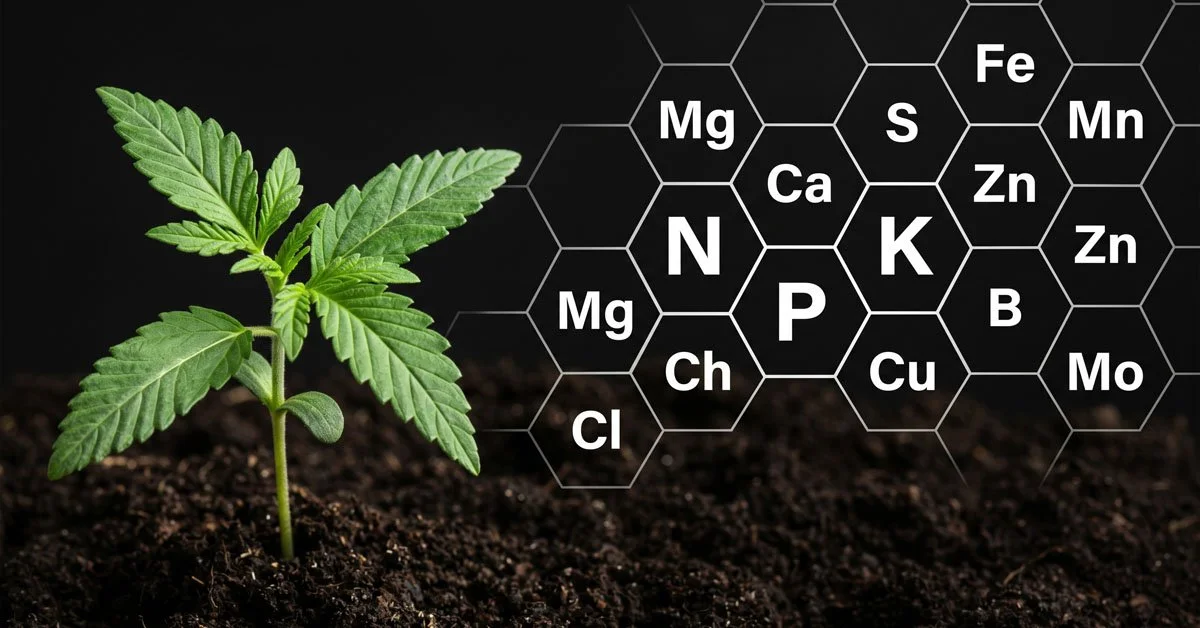
Autoflower nutrients aren't complicated. But they do require a lighter touch than most marijuana growers expect.
Feed autos like photoperiods and you'll hit nutrient burn before your plant even reaches the flowering stage. It's one of the most common mistakes in cannabis cultivation. And, fortunately, one of the easiest to avoid.
This in-depth guide breaks down the best autoflower nutrients, ideal NPK ratios, a week-by-week feeding schedule, and tips to keep your auto grow on track from seed to harvest.
Why Autoflowering Plants Need a Different Feeding Approach
Autoflowering weed plants flower based on age, not light cycles. That single trait shapes everything about how they need to be fed. A few key characteristics set them apart from photoperiods:
Compressed life cycle. Most autoflowering strains complete their entire grow in 9–12 weeks, with vegetative growth wrapping up in just 2–3 weeks before the flowering stage kicks in automatically.
Compact root zones. Smaller root systems absorb nutrients differently and have less capacity to buffer any excess. This makes overfeeding easier to trigger than most growers expect.
Lower overall nutrient needs. Autoflowering plants simply don't eat as much as photoperiods. The doses on most nutrient labels are often designed for larger, longer-running plants.
No recovery time. Stunted growth caused by overfeeding in week 2 can follow an auto plant all the way to harvest with no opportunity to fix it.
The cruel irony is that most overfeeding happens with the best intentions. Growers want their plants to thrive, so they feed them generously hoping for generous autoflower yields — not realizing that they're often doing more harm than good.
So, What's the Best Approach to Feeding Autoflowering Plants?
Start low and build slowly. Begin with a mild nutrient mix at a fraction of the recommended dose and build up gradually based on how the plant responds (not on what the label says).
Most nutrient mixes calibrate their doses for photoperiod marijuana plants, which means the recommended amounts are often too strong for autoflowering crops. Treat them as a ceiling, not a target. Most autoflowersrarely need more than half the suggested amount at any stage.
Before we get into specifics, let's go over the fundamental nutrient needs of autoflowering plants.
Essential Nutrients for Autoflowering Cannabis Plants
Autoflowering strains need the same core nutrients as any other cannabis plant, just in lighter, better-timed amounts. Understanding what each nutrient does helps you make smarter decisions about your feeding schedule at every growth stage.
Macronutrients (The Famous N-P-K Trio)
Nitrogen (N), phosphorus (P), and potassium (K) are the three essential nutrients that form the backbone of any nutrient mix:
Nitrogen (N) fuels vegetative growth, including leaf development, stem growth, and chlorophyll production. It's the priority during the vegetative stage and should drop off sharply once flowering begins.
Phosphorus (P) drives root and bud development. It becomes the most important macronutrient during the flowering stage.
Potassium (K) supports overall plant health, water regulation, and flower density. It works alongside phosphorus throughout the flowering stage to support robust growth and dense buds.
Secondary and Micronutrients
Beyond NPK, autoflowering plants rely on a range of secondary and micronutrients that quietly support healthy growth, nutrient absorption, and overall vitality. Here's a quick rundown:
| Nutrient | Type | Role |
|---|---|---|
| Calcium (Ca) | Secondary | Cell wall structure and plant integrity |
| Magnesium (Mg) | Secondary | Chlorophyll production and photosynthesis |
| Sulfur (S) | Secondary | Protein synthesis and enzyme function |
| Iron (Fe) | Micro | Supports chlorophyll production and nutrient absorption |
| Zinc (Zn) | Micro | Hormone production and healthy leaf development |
| Manganese (Mn) | Micro | Assists enzyme activity and photosynthesis |
| Copper (Cu) | Micro | Supports enzyme function and stem growth |
| Molybdenum (Mo) | Micro | Nitrogen processing and overall plant health |
| Boron (B) | Micro | Cell wall development and nutrient transport |
What Nutrient Mix Do Autoflowers Need at Each Growth Stage?
Autoflowers need a nitrogen-led nutrient mix during the vegetative stage, a phosphorus and potassium-dominant blend through the flowering stage, and nothing but plain water at the very start and end of their life cycle.
The exact NPK ratios — along with the secondary and micronutrient support required at each point — shift significantly as the plant develops. Here's the full breakdown:
Seedling Stage (Weeks 1–2)
No added nutrients. The growing medium contains enough to support early plant growth without additional feeding. Adding nutrients at this stage risks burning the roots before they're established, which triggers premature stunted growth that's hard to recover from.
Vegetative Stage (Weeks 3–5)
A higher nitrogen ratio takes the lead — around 3:1:2 (N:P:K). Start at 1/8 strength and slowly increase toward 1/4 as the plant responds well. This supports robust growth of the overall plant structure, including the leaves and stems.
Secondary & Micro Nutrients in Veg
Calcium and magnesium are the priorities here. Particularly important in coco coir grows where the medium provides neither. Iron and zinc begin to matter as leaf growth accelerates.
Transition to Early Flower (Weeks 4–6)
Once white pistils appear the flowering stage has begun, nitrogen (N) should start dropping while phosphorus (P) and potassium (K) rise. A ratio around 2:2:2 (N:P:K) works well here. To achieve this, run your veg and bloom nutrients simultaneously at equal, reduced strengths rather than switching abruptly from one to the other.
For example, if you're feeding at 1/4 strength, split that evenly between your veg and bloom formula. This gradual shift helps prevent premature flowering triggered by a sudden change in the nutrient mix.
Secondary & Micro Nutrients in Early Flower
Continue calcium and magnesium support. Iron, zinc, and manganese become increasingly important as the plant redirects energy toward flower development and enzyme activity ramps up.
Flowering Stage (Weeks 6–9)
Phosphorus and potassium dominate here. Aim for a ratio around 1:3:2 (N:P:K) to support early bud development, shifting toward 0:3:3 in mid to late flower. A higher nitrogen ratio at this stage suppresses bud growth and redirects energy toward leaf growth rather than flowers.
Secondary & Micro Nutrients in Flower
Calcium remains critical for cell structure as buds develop and swell. Magnesium, copper, boron, and molybdenum play a quiet but important supporting role in nutrient transport and overall plant health through to late flower.
Final Flush (weeks 9–10+)
Switch to plain pH-balanced water for the last 1–2 weeks. This clears residual salt buildup (including accumulated micronutrients) from the growing medium, which typically improves the smoothness and quality of the final harvest.
Autoflower Feeding Schedule: A Quick Week-by-Week Guide
A good autoflower feeding schedule stays flexible — it's a guide, not a rulebook. Use the table below as a quick reference throughout your grow, but always let the plant have the final say.
| Week | Growth Stage | NPK Feed | Feed Strength | Supplementary Micro Nutrients |
|---|---|---|---|---|
| 1–2 | Seedling | pH-balanced water only | — | None |
| 3 | Early veg | Veg nutrients (3:1:2) | 1/8 strength | Calcium, Magnesium |
| 4–5 | Active veg | Veg nutrients (3:1:2) | 1/4 strength | Calcium, Magnesium, Iron, Zinc |
| 5–6 | Transition | Veg + bloom blend (2:2:2) | 1/4 strength | Calcium, Magnesium, Iron, Zinc, Manganese |
| 6–8 | Early flowering | Bloom nutrients (1:3:2) | 1/4–1/2 strength | Calcium, Magnesium, Manganese, Copper |
| 8–9 | Mid/late flower | Bloom nutrients (0:3:3) | 1/2 strength | Calcium, Magnesium, Copper, Boron, Molybdenum |
| 9–10+ | Pre-harvest flush | pH-balanced water only | — | None |
How Often Should You Feed Autoflowers?
How often you feed your autoflowers (and the pH you target) depends entirely on your growing medium. Here's what you need to know:
| Growing Medium | Target pH | Feeding Frequency |
|---|---|---|
| Soil | 6.0–7.0 (optimal 6.0–6.5) | Every other watering. Use plain pH-balanced water in between to prevent salt buildup. |
| Coco Coir | 5.8–6.0 in veg 6.0–6.2 in flower |
Every watering at reduced strength since the medium contains no nutrients of its own. |
| Hydroponics | 5.5–6.0 | Continuously or daily at reduced strength. Check pH regularly as there's no buffering capacity. |
The Importance of pH
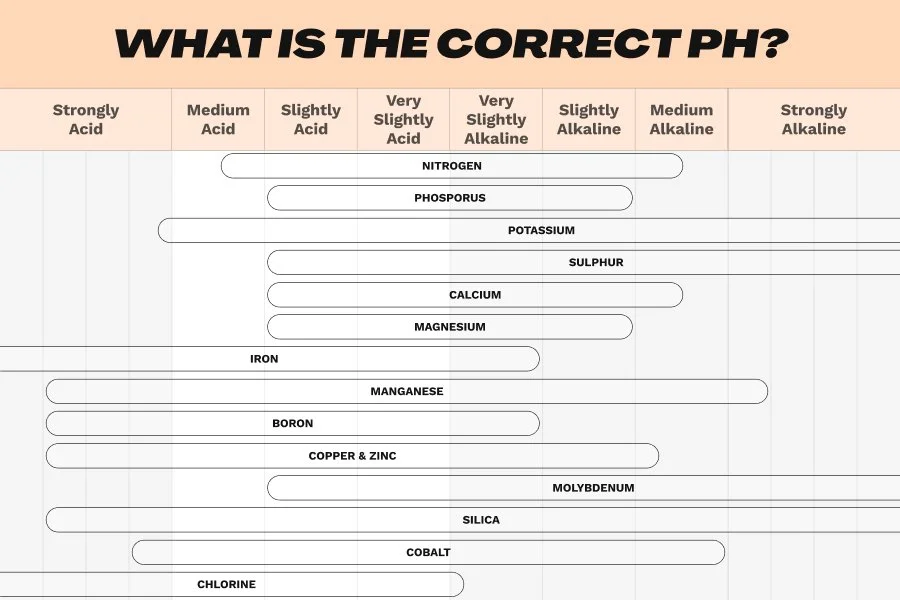
pH determines whether the nutrients in your growing medium are actually accessible to the plant. When it drifts outside the correct range, plants can't absorb what you're feeding them. This is called nutrient lockout. It mimics nutrient deficiencies but won't respond to additional feeding.
Additionally, always check the pH of your nutrient mix after preparing it, before it reaches the plant.
Organic vs. Synthetic Nutrients
Choosing between organic nutrients and synthetic nutrients comes down to your setup, your goals, and how much control you want over what your plants receive at each stage.
Organic Nutrients
Organic nutrients come from natural sources. Worm castings, fish emulsion, bone meal, kelp, and compost are common examples. In soil, they feed the microbial life that converts organic matter into plant-available forms, making it difficult to cause nutrient burn. They also build healthy soil over time, which improves nutrient absorption across multiple grows.
The downside is speed. If an autoflowering plant shows nutrient deficiencies in week six, organic nutrients simply can't correct the problem fast enough before harvest.
Synthetic Nutrients
Synthetic nutrients are water soluble nutrients that go directly to the roots with no biological conversion needed. They're fast-acting, precise, and easy to adjust between growth stages — which is exactly what inert growing mediums like coco or hydro require, since they provide no nutrition on their own.
The trade-off is that the buffer disappears. A dose that's too strong hits the root zone at full strength immediately. For autoflowering plants (which are already more sensitive to excess than photoperiods), this makes nutrient burn a real risk when doses aren't handled carefully.
Which Works Best for Autoflowering Marijuana Plants?
Many experienced growers combine both: organic ingredients in the soil for baseline nutrition and microbial activity, with targeted synthetic nutrients for precision and speed.
This approach captures the soil health benefits of organics alongside the control that synthetic nutrients provide.
| Element | Organic Nutrients | Synthetic Nutrients |
|---|---|---|
| Speed | Slow release | Fast acting |
| Burn risk | Low | Higher if overdosed |
| Soil health | Builds microbial life | Minimal benefit |
| Precision | Less controllable | Highly controllable |
| Deficiency correction | Slow | Fast |
| Best for | Soil grows | Coco coir, hydro, soil |
Best Nutrients for Autoflowers at Seed Supreme
Seed Supreme stocks two nutrient kits from Homegrown Cannabis Co. that take the guesswork out of feeding your auto plants from seedling to harvest.
Cannabis Nutrient Kit by Homegrown Cannabis Co.
A beginner-friendly complete feeding system that covers all growth stages. The kit includes:
Base Grow & Bloom (400g powder): Core macronutrients for the vegetative stage and into flower.
Sweet Bloom (240ml liquid): Introduced at flower transition and continued through to harvest.
Flower Booster (240ml liquid): Added from week 3 of the flowering stage to support bud growth.
Works across soil, coco coir, and hydroponic setups. Components are designed to be used together, removing compatibility issues that come from mixing products across different brands.
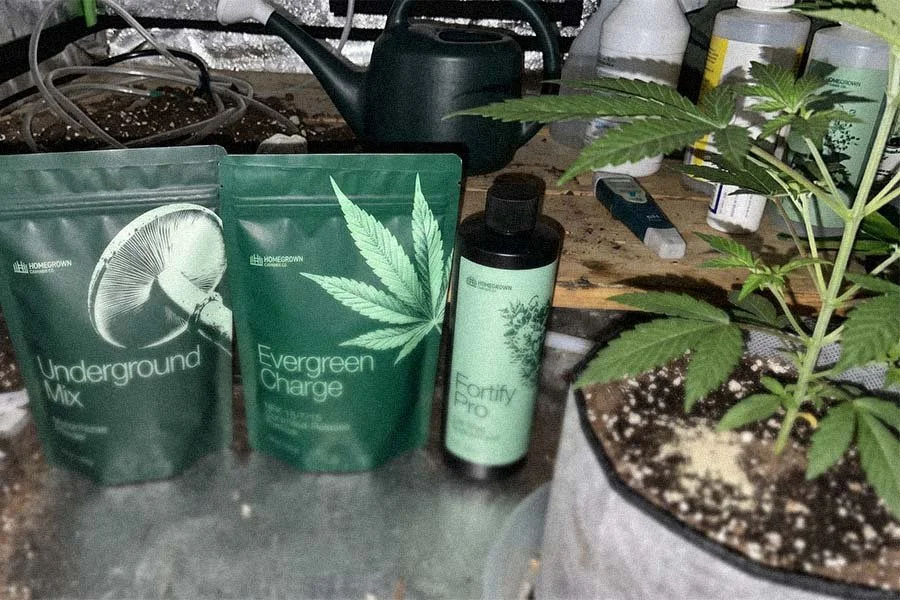
A more advanced three-product system built around biological root health, sustained NPK feeding, and secondary nutrient support. The kit includes:
Underground Mix Mycorrhizae Powder(14oz): A 100% organic mycorrhizal inoculant designed to build a symbiotic root network that improves nutrient uptake for the plant's entire cycle.
Evergreen Charge NPK Controlled Release Fertilizer (16oz): A slow-release NPK fertilizer that feeds steadily for 4–8 weeks per application, reducing overfeeding risk significantly.
Fortify Pro Cal-Mag Supplement (8oz liquid): A fast-acting calcium and magnesium supplement that prevents and corrects the secondary nutrient deficiencies most common during the flowering stage.
Compatible with all growing mediums including soil, coco, hydroponics, and outdoor grows.
Whichever kit you choose, remember: reduce doses significantly compared to the label guidance, which is calibrated for larger photoperiod cannabis plants.
Nutrient Burn: How to Spot It and What to Do
Nutrient burn is arguably the most common problem in autoflowering cannabis cultivation, and it almost always comes from too much, too soon. The first signs appear at the leaf tips. They yellow, turn tan, then go brown and crispy. In more advanced cases, leaves begin to curl or claw downward, often a sign of excess nitrogen.
And it can't be reversed. Affected leaf tissue stays burnt. What you can do is stop it progressing. Trim severely damaged leaves, flush the growing medium with pH-balanced water to clear excess salts, then resume feeding at a lower strength.
One important distinction: nutrient burn and nutrient deficiencies can look similar early on.
If you've been feeding conservatively and problems appear, check your pH before adding more nutrients. Lockout caused by incorrect pH mimics deficiency symptoms but won't respond to additional feeding. So, adding more will make things worse.
Common Feeding Mistakes That Hurt Autoflower Grows
Even experienced growers get these wrong — here's what to watch out for:
Starting nutrients too early. Seedling roots can't handle a nutrient feed, and early overfeeding causes stunted growth that follows the plant through its entire shorter life cycle.
Using full-strength doses. Nutrient brands design feeding schedules for photoperiod weed plants. For autoflowering crops, start well below the recommended amount and gradually increase based on how the plant responds.
Keeping nitrogen levels high into flower. Excess nitrogen during the flowering stage redirects energy toward leaf growth rather than flower development — and you can't get those weeks back.
Neglecting pH. Even a 'slightly off' pH across multiple waterings will gradually prevent deficiencies from being corrected and limit optimal growth. It's one of the most overlooked variables in maximizing yield.
Skipping the pre-harvest flush. Two weeks of pH-balanced water before harvest helps clear the growing medium of residual nutrients and is a step worth taking for a cleaner final product.
Autoflower Feeding Schedule FAQs
Need a quick answer to a common question? Check out these FAQs:
A Feed Fit For Autoflowering Weed Plants
Autoflowers don't ask for much. Just the right nutrients, at the right time, in the right amounts. Start light, increase gradually, keep your pH in range, and let the plant tell you the rest.
Do that consistently and bountiful harvests are sure to follow. Ready to put your newfound feeding knowledge to good use? Browse our full range of autoflowering cannabis strains at Seed Supreme.
-
Start introducing nutrients around week 3, once the plant has its first true leaves and is growing steadily. Begin at one-eighth strength. Starting earlier — or at full strength — is a common cause of stunted growth in autoflowering crops.
-
Always start well below the label dose. Most feeding schedules are written for photoperiod plants, so following them directly with autoflowering marijuana plants will lead to overfeeding. Gradually increase strength over several weeks and watch leaf tips daily for early warning signs.
-
No, autoflowering cannabis strains need the same essential nutrients, just in smaller amounts and on a faster schedule. The shift from vegetative nutrients to flowering nutrients happens earlier than with photoperiods, and there's less time to correct mistakes across the shorter life cycle.
-
Yes, most growers flush their auto plants in the final 1–2weeks. This clears residual salts from the growing medium, and many find it contributes to a smoother end product. Natural fan leaf yellowing during this period is healthy and expected.
-
Start the flowering stage around 1:3:2 (N:P:K) to support early bud development, then shift toward 0:3:3 in mid to late flower to focus the plant entirely on flower production. Dropping nitrogen during this stage is essential as too much of it reduces the quality of the final harvest.