How Often to Fertilize Flowering Marijuana: A Stage-by-Stage Feeding Guide
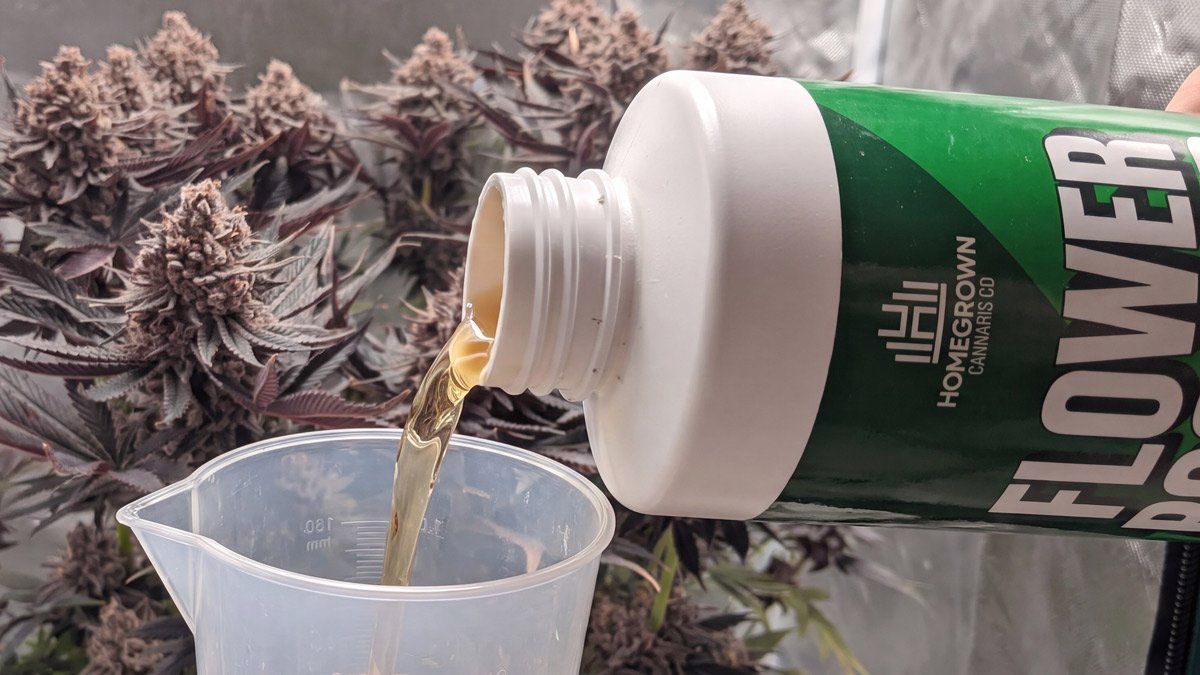
Knowing how often to fertilize flowering marijuana quietly determines how your harvest turns out. Get the timing right and plants push everything into dense, resin-covered buds. Misjudge it and you're either triggering nutrient issues that sets bud growth back by weeks, or leaving plants without enough nutrients to finish properly.
This guide covers feeding frequency from the first day of flower through to the final weeks before harvest, with adjustments for growing medium, growth phase, and what your plants are telling you.
What Changes When Cannabis Enters the Flowering Stage
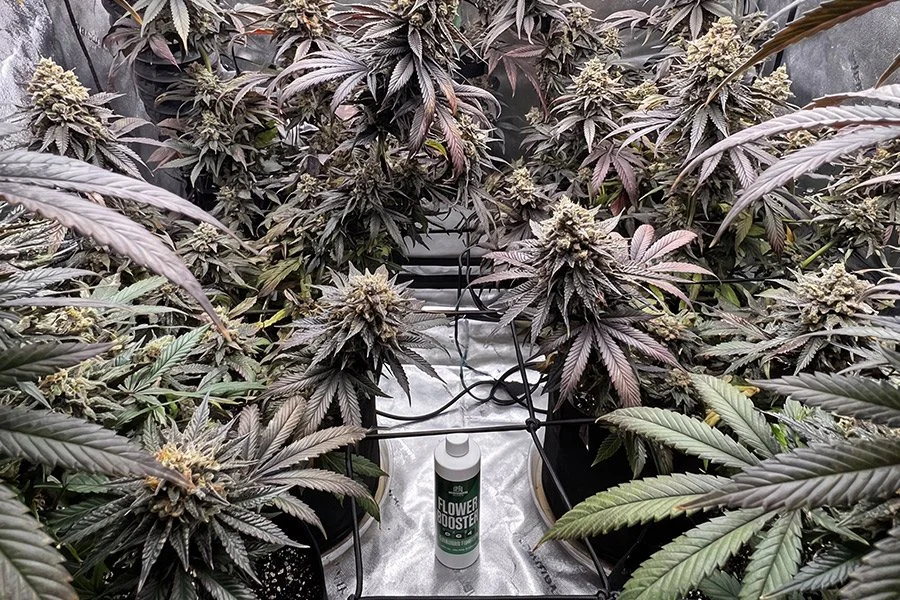
Cannabis plants shift their nutrient priorities sharply once flowering begins. During the vegetative stage, nitrogen drives everything: it supports vigorous vegetative growth and keeps stems strong. As plants transition into flower, those nitrogen needs drop off and phosphorus and potassium take over
This shift plays out gradually over the first two to three weeks of the bloom stage. Your feeding schedule needs to transition alongside your plants rather than flip overnight.
The Role of NPK During Flowering
NPK describes the ratio of nitrogen (N), phosphorus (P), and potassium (K) in a fertilizer. During flowering you want formulas that progressively use less nitrogen and deliver more phosphorus and potassium. A general NPK progression across the bloom stage looks like this:
Early flower: moderate nitrogen, higher phosphorus, moderate potassium (e.g., 5-10-7)
Mid flower: less nitrogen, higher phosphorus and potassium (e.g., 4-12-10)
Late flower: minimal nitrogen, reduced phosphorus and potassium (focus shifts to flush)
Most growers find that two bottles—a grow formula and a bloom formula—let you blend across the transition rather than making a hard cut. Adequate phosphorus drives bud development and resin production throughout the bloom stage. Potassium supports photosynthesis and the structural strength plants need to hold heavy colas.
Calcium and Magnesium
Calcium and magnesium are needed at every stage of plant growth, including throughout flowering. Calcium supports cell wall development as buds stack weight. Magnesium helps plants make efficient use of grow lights during the bloom phase.
Deficiencies in either tend to appear mid-flower. Brown spots on mid-canopy leaves usually point to calcium. Yellowing between the veins while the veins stay green is a magnesium signal. Adding a Cal-Mag supplement alongside bloom nutrients is the most reliable way to prevent both.
How Often to Fertilize Flowering Cannabis: By Phase
Feeding frequency shifts with each sub-phase of flowering. The figures below are solid starting points, not rigid rules, so adjust based on how your cannabis plants respond.
Early Flowering Stage (Weeks 1–3)
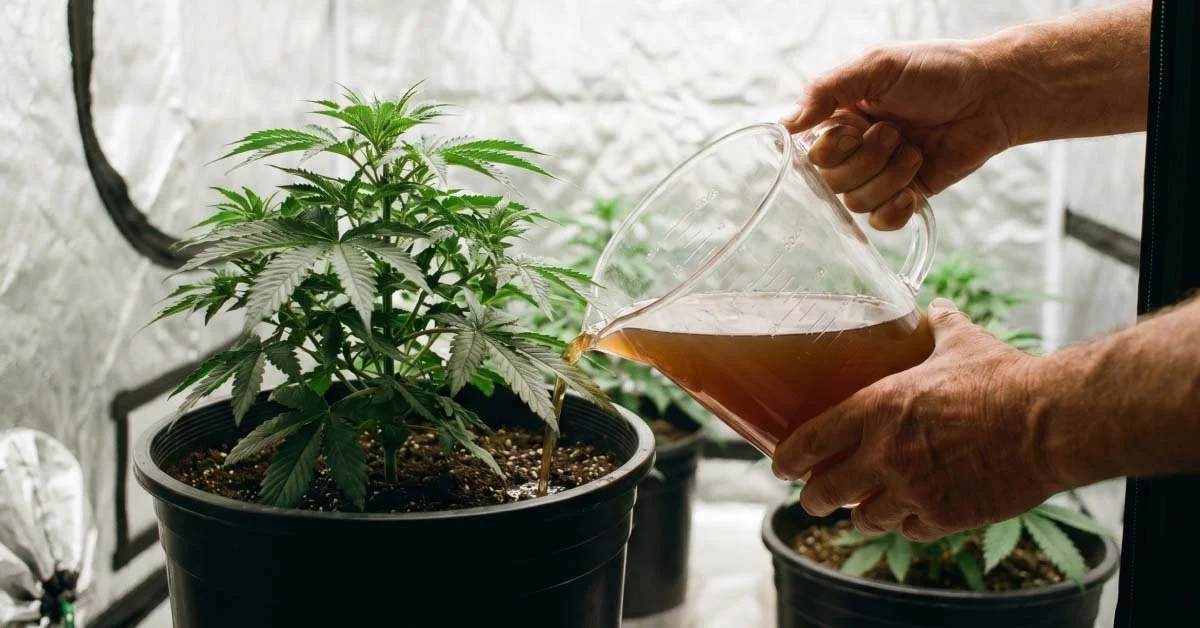
The early flowering stage covers the stretch period, when plants redirect energy toward developing bud sites. Nitrogen needs are still present because vegetative growth hasn't fully stopped, the stretch is a form of continued plant growth that requires structural support.
Feed every 5–7 days. Keep nitrogen at moderate levels to support the stretch while increasing phosphorus to encourage early bud formation. Transition gradually from vegetative nutrients to bloom nutrients across weeks 1–2, moving fully into bloom feeds by week 3.
Yellowing tips or curling leaves at this stage usually mean you're pushing nutrient levels too fast, so back off the concentration before the next feed.
Mid Flowering Stage (Weeks 4–6)
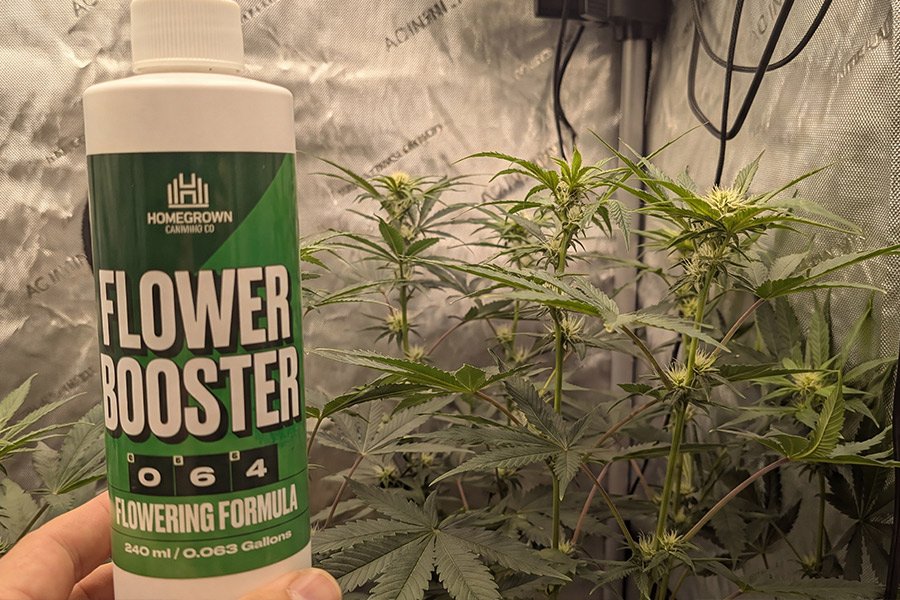
Check out this flower booster the perfect addition to your nutrient plan.
This is the bloom stage at its most demanding. The stretch is over, bud sites are stacking weight, and nutrient requirements are at their peak. Continue feeding every 5–7 days but bring bloom nutrient concentration to its highest point.
More phosphorus means more energy transfer into active bud development: this is the phase where adequate phosphorus directly determines how big buds get. Grow bigger buds by keeping phosphorus high and consistent through week 6.
Nutrient burn is most common here. It shows as brown, crispy tips on sugar leaves that work inward over time. If you see it, drop concentration by 25% at the next feed and run a plain pH-adjusted watering in between to clear excess nutrients from the root system.
Late Flowering Stage (Weeks 7 Through Flush)
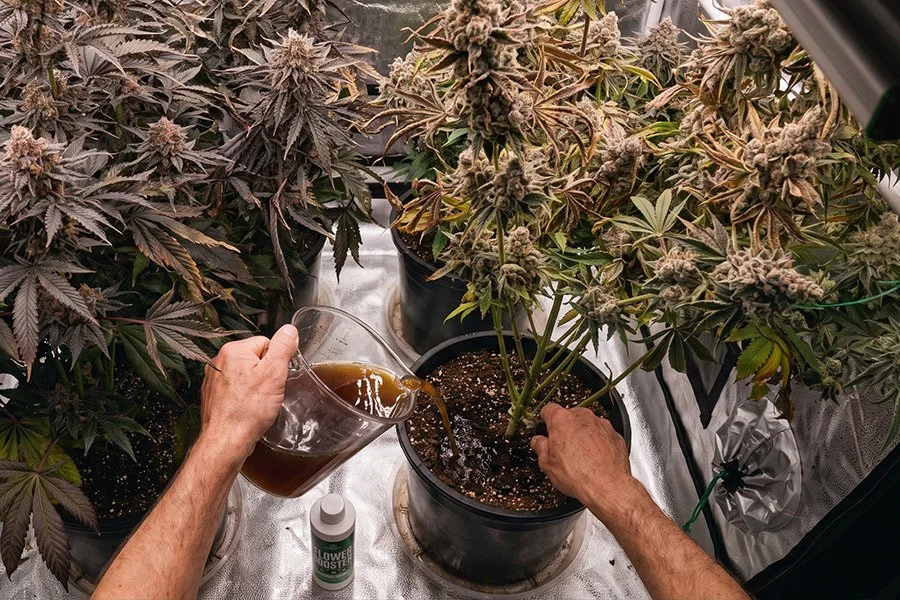
During the late flowering stage, nutrient requirements begin to drop. Reduce feeding frequency to every 7–10 days and taper bloom nutrient concentration as harvest approaches.
Trichomes shift from clear to cloudy to amber across this window. As that progression accelerates, plants are wrapping up active nutrient uptake, and pushing high nutrient levels now just means more remaining nutrients to flush out later.
Most growers switch to plain pH-adjusted water in the final 1–2 weeks. Tap water works if pH is adjusted correctly.
How Your Growing Medium Affects Feeding Frequency
Your growing medium has more influence over feeding frequency than almost anything else.
Soil
Soil holds moisture and retains cannabis nutrients between feeds, so plants can access what they need even on non-feeding days. Feeding every 5–7 days during peak flower is standard, with plain waterings in between to prevent salt buildup. Organic soil setups sometimes require less frequent liquid feeding, since microbial activity makes nutrients available gradually.
Coco Coir
Coco coir is inert, it holds no nutrients of its own and dries faster than soil. Cannabis plants grown in coco coir typically need feeding daily or every other day during peak flower.
Coco also has a natural affinity for calcium and magnesium, so those two elements need consistent supplementation to support healthy growth throughout the bloom stage. Deficiencies here are usually a sign of insufficient feeding frequency rather than a problem with the nutrient solution itself.
Hydroponic Systems
In hydroponic systems, plants have near-constant access to a nutrient solution through the root system. Feeding frequency in the traditional sense doesn't apply, and monitoring EC and pH daily is the hydro equivalent of a soil feeding schedule.
Reservoir changes every 7–14 days with regular top-ups in between is a standard approach. Nutrient levels and pH can shift quickly in hydro, so daily monitoring matters more than the frequency of reservoir changes.
Signs Your Schedule Needs Adjusting

Signs of not enough nutrients:
Pale or yellowing leaves mid-flower (nitrogen deficiency)
Slow bud growth with minimal trichome development
Weak stems and loose bud structure
Signs of overfeeding / nutrient burn:
Brown or crispy tips on sugar leaves, spreading inward
Dark, waxy leaves (nitrogen toxicity in early flower)
Leaf clawing or downward curl
Signs of calcium or magnesium deficiency:
Brown spots on mid-canopy leaves
Interveinal yellowing (green veins, yellow leaf tissue)
Weak stems and poor bud development
Mild nutrient burn can often be corrected within one or two feed cycles. A nutrient deficiency takes 7–10 days to show visible improvement even once the issue is addressed. Catching problems early makes a measurable difference.
Feeding Autoflowering Cannabis During Flower
Autoflowering cannabis seeds produce plants that have a compressed lifecycle that changes how the feeding schedule plays out. Because autos flower automatically without a light schedule change, vegetative growth and the early flowering stage overlap, so the transition from vegetative nutrients to bloom nutrients needs to happen earlier.
Autoflowers are generally more sensitive to high nutrient concentrations than photoperiod strains. Start at roughly half the recommended dose of any bloom nutrient and increase gradually.
Feeding every 5–7 days works well for most autoflowering plants, with the late-flower taper beginning around weeks 8–9 from seed depending on several factors including strain and grow environment. Consistent, steady nutrition supports healthy growth far better than peak-dose feeding in any single phase.
Conclusion
Getting the flowering fertilizer schedule right comes down to knowing which phase your plants are in, understanding how you grow cannabis affects nutrient availability, and reading plant signals closely enough to adjust before small issues become bigger ones.
Feed every 5–7 days during early and mid flower, taper off in the late flowering stage, and flush in the final weeks before harvest. Run more frequent feeds in coco coir or hydro. In soil, let the medium's buffering capacity work between feeds and avoid pushing nutrient levels beyond what plants are asking for.
Browse the Seed Supreme catalog to find genetics with well-documented nutrient requirements and predictable flowering timelines that take the guesswork out of scheduling.
FAQs
-
Cannabis plants in the flowering stage primarily need phosphorus and potassium, with less nitrogen than during the vegetative growth stage. Calcium and magnesium are also needed throughout. Bloom-specific cannabis nutrients are formulated to match these requirements, typically carrying a lower nitrogen value than vegetative formulas.
-
Yes. Overfeeding is one of the most common mistakes during the bloom stage. Nutrient burn shows as brown, crispy leaf tips and can slow bud growth if left unchecked. Always start below the label's recommended dose and increase based on how cannabis plants respond.
-
Most growers stop feeding in the final weeks before harvest and switch to a plain water flush. Timing depends on growing medium. Coco coir and hydroponic systems may need only 3–5 days, while soil holds remaining nutrients longer and typically benefits from a 7–14 day flush.
-
Autoflowering cannabis plants need lower nutrient concentrations than photoperiod strains and are more prone to issues from excess nutrients. A schedule of every 5–7 days starting at half-strength is a reliable approach. The late-flower taper should begin earlier than in a photoperiod grow due to the shorter lifecycle.
-
The best fertilizer for flowering marijuana is a bloom-specific formula with a higher phosphorus and potassium ratio and less nitrogen. Multi-part nutrient lines let you adjust the NPK ratio at each phase of flowering. Look for formulas that include calcium and magnesium, or plan to supplement separately.