Cannabis Leaves Curling Up or Down? Here's Why It Happens & How to Fix It
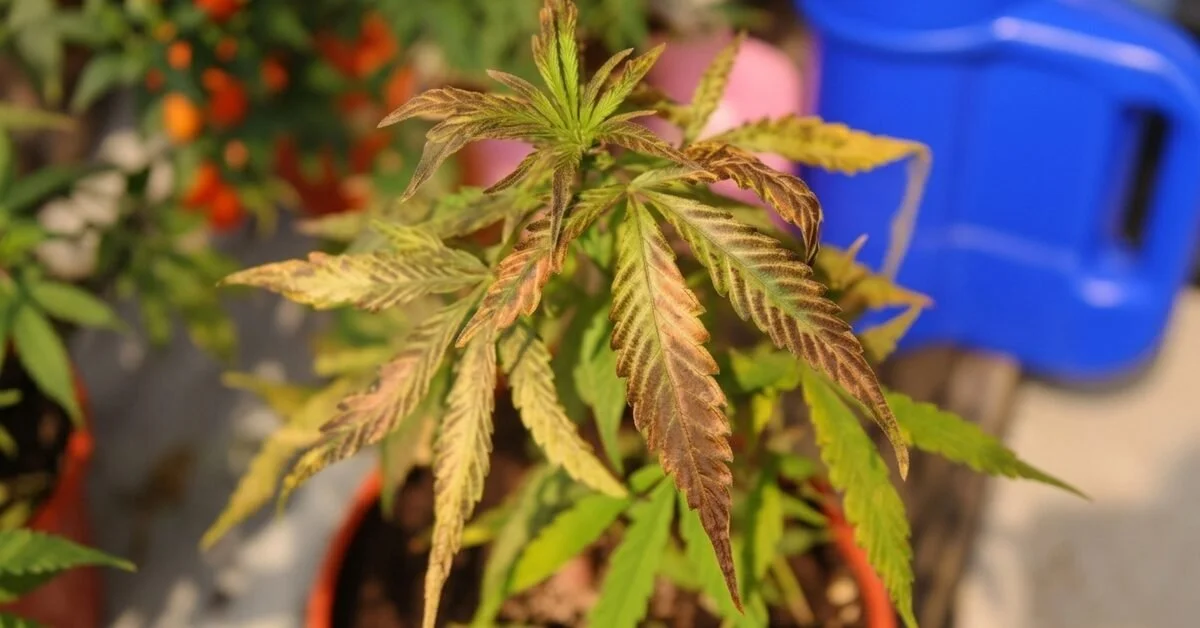
Cannabis leaves curling up or down is your plant's way of telling you something is off.
The frustrating part?
Leaf curling has loads of possible causes. Heat, humidity, watering habits, nutrients, pests, and root health can all be the trigger — and several of them look nearly identical at first glance.
But once you know how to fix cannabis leaves curling, you can course correct and get your grow back on track. This guide breaks down every major cause, how to tell them apart, and exactly what to do about each one.
What Curling Leaves Actually Mean
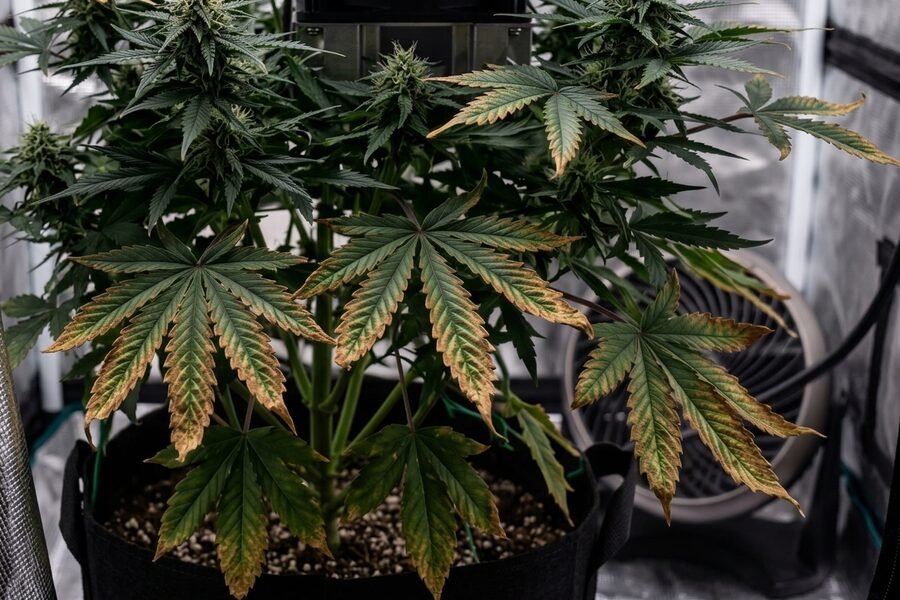
Curling leaves are a defense mechanism. When cannabis plants are under stress, they curl to reduce surface area, limit water loss, or protect themselves from excessive heat and light.
The direction of the curl is your first diagnostic clue:
Upward curling (the taco or canoe shape) typically points to environmental stressors like excessive heat, intense light, or low humidity.
Downward curling, often called "clawing," tends to signal nutrient imbalances, overwatering, or root issues, although environmental factors may also play a role.
Unusual leaf curling that doesn't fit either pattern often suggests pest activity or a combination of stressors happening at once.
Causes of Cannabis Leaves Curling Up Or Down
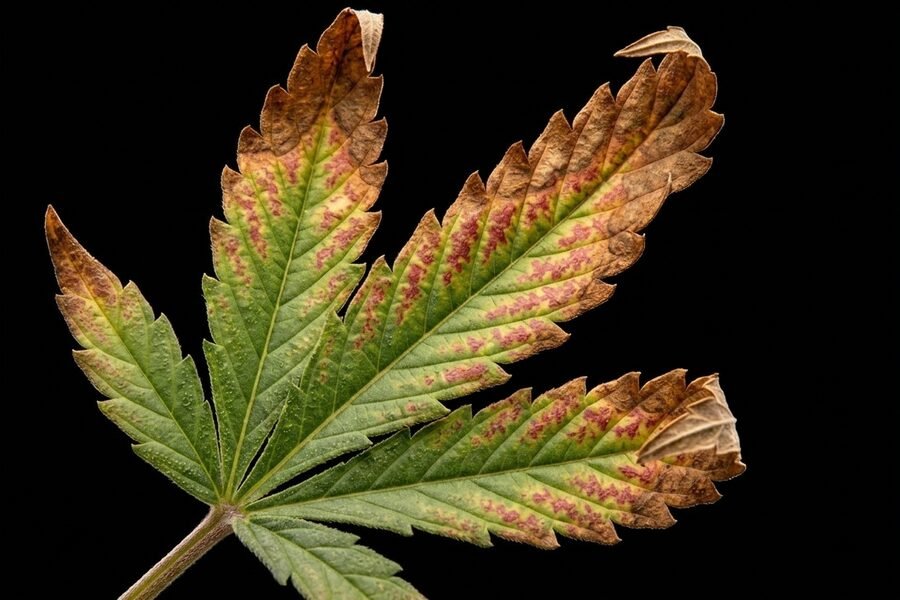
Each cause of curling leaves tends to show up in a specific way. Where on the weed plant the curl appears, which direction it goes in, and what other symptoms accompany it.
Here's what's most likely going wrong — and how to fix and prevent leaf curling.
Heat Stress
When grow room temperatures climb above 85°F, cannabis plants ramp up transpiration to reduce surface exposure and slow moisture loss. Leaves taco upward, sometimes appearing slightly bleached. In severe cases, they can crisp up and brown, and the plant may look generally droopy.
How it Happens
Grow lights too close to the canopy create hot spots even when the ambient grow space feels comfortable. Outdoors, heat waves or consistently high afternoon temps produce the same effect.
How to Fix Curling Leaves From Heat Stress
Monitor temperatures at canopy height: Aim to keep within 72-82°F during lights-on periods.
Raise your lights immediately: Increase distance by 6–12 inches to reduce heat intensity at the canopy.
Switch your light cycle: Keep lights on during cooler nighttime hours and off during the hottest part of the day.
Water more frequently: Cannabis plants lose water faster under heat stress. Increase watering frequency without increasing volume per session.
Cool the roots: If pots are sitting on concrete or hot flooring, lift them onto wooden pallets to reduce heat transfer from below.
Outdoors: Set up shade cloth during peak afternoon hours, water in the early morning, and move potted plants out of direct sun when temperatures consistently exceed 85°F.
Cold Stress
Cold stress causes leaves to curl downward rather than up. Growth visibly slows, the marijuana plant looks sluggish, and leaves may take on a darker or slightly purplish tint in prolonged cold exposure.
How It Happens
Steep temperature drops or cold snaps can catch many growers off guard. Anything below 60°F slows growth significantly, which may lead to cell damage and nutrient lockout. Outdoor growers are most vulnerable during early spring or late fall grows. Indoors, the space cools down fast when lights go off.
How to Fix Leaves Curling From Cold Stress
Move potted outdoor plants: Put them under cover if overnight temps are forecast to drop below 60°F.
Insulate the roots: Move pots off cold floors onto wooden pallets or Styrofoam blocks.
Run lights during the coldest hours: Use light cycle heat to offset overnight temperature drops.
Reduce extraction at night: Turn down exhaust fan speed after lights out to retain warmth (while still maintaining enough airflow to prevent mold).
Use lukewarm water: If the soil is quite cold, water your cannabis plants with water around 70°F to gently wake up root activity.
Light Stress
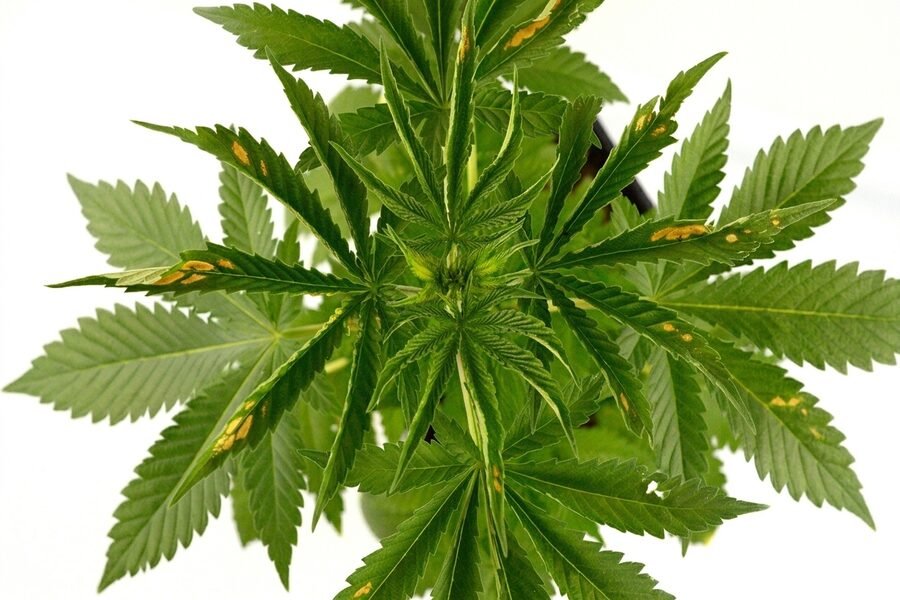
Excessive light intensity — even with temperature under control — causes upper cannabis leaves to taco upward. Bleached patches on leaf edges are a telltale sign, and the curl typically stays confined to the top of the canopy while lower foliage remains flat.
How It Happens
When indoor growers place their lights too close to the canopy, it overwhelms the plant's ability to manage the intensity. Outdoor plants in high-altitude locations or during peak summer can experience the same thing from direct sun.
How to Fix Leaves Curling From Light Stress
Increase light distance: Keep LED grow lights at least 12 inches away as a minimum starting point.
Dim the lights: Reduce power by 10–20% and monitor plant response over the next 48 hours before adjusting further.
Use low-stress training: If you can't raise the lights, gently tie down the tallest branches to pull them away from the most intense spot directly under the fixture.
Check your light schedule: If you're running an 18/6 or 24/0 cycle, consider giving plants a longer dark period to recover. Sometimes they simply need more time without light.
Outdoors: Use a shade cloth to reduce peak sun intensity without meaningfully affecting yield.
Low Humidity
Leaves curling upward with dry, crispy edges point toward low humidity. Growth may stall as the plant closes its stomata to conserve water. In extremely dry conditions, weed plants may also pull in excess nutrients as they use more water to compensate, leading to burnt leaf tips alongside the curl.
How It Happens
Exhaust fans constantly pull dry air through to a grow tent, which can cause humidity to drop. Outdoors, hot and arid conditions during summer create the same problem. When the air is too dry, plants lose water through their leaves faster than roots can replace it.
How to Fix Leaves Curling From Low Humidity
Track humidity accurately: Use a thermo-hygrometer and aim for 45–60% in veg and 40–50% in flower.
Boost indoor moisture levels: Use a humidifier or lightly spray the tent walls with water.
Use open water containers: Place buckets of water near intake fans to naturally raise humidity by 5–10% without any equipment.
Reduce nutrients slightly: In very dry conditions, cut your feed dose by around 25% to avoid nutrient overload.
Outdoors: Mulch around the base of your cannabis plants to retain soil moisture and reduce the drying effect of warm air on the root system.
Windburn
Windburn is easy to miss because it looks similar to other environmental stress, but the damage is always localized to the side of the plant closest to the fan or prevailing wind. Affected leaves claw downward or sideways in a distorted way, sometimes developing small brown or bronze spots.
How It Happens
A fan pointed directly at plants beats the leaves continuously, stripping moisture from the surface and damaging tissue over time. Outdoors, strong prevailing winds do the same thing to exposed plants.
How to Fix Leaves Curling From Windburn
Aim at walls or ceiling: Use oscillating fans at the tent walls to create a gentle air vortex that circulates without direct impact on foliage.
Increase fan distance: Keep clip-on fans at least 12–24 inches from the nearest foliage.
Outdoors: Use natural windbreaks like hedges, fences, or tall companion plants to reduce direct wind exposure.
Watering or Root Problems
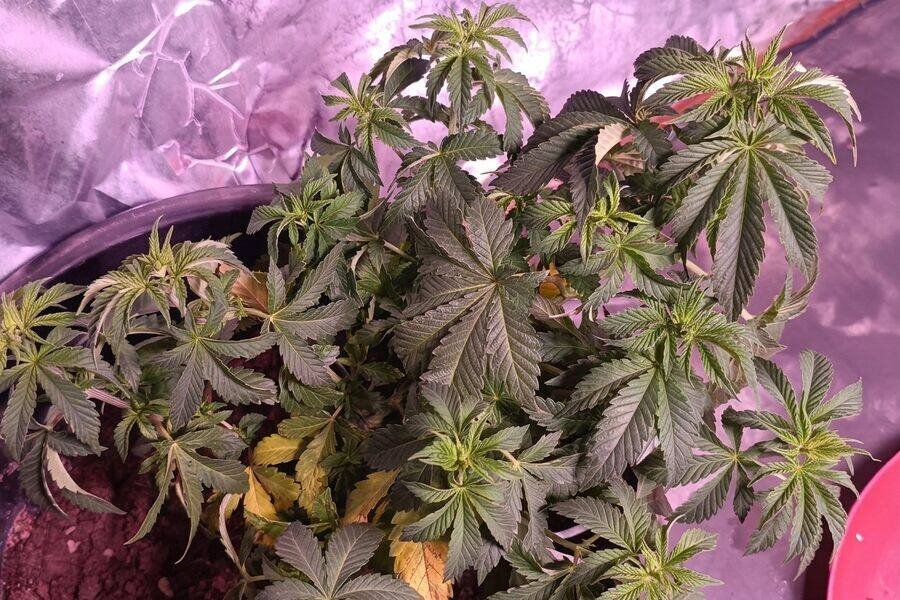
Watering or root problems tend to affect the entire cannabis plant at once rather than just the top or one side. The direction and texture of the curl tell you what's actually happening beneath the soil:
Overwatered: Leaves curl downward and feel thick and firm, although the plant stays green.
Underwatered: Leaves curl downward but feel thin and papery with yellowing tips.
Root rot: Leaves curl, twist, and turn yellow or brown as though the plant has multiple deficiencies at once. If drainage water smells like a swamp, root rot is almost certainly the cause.
Root-bound: Leaves spiral and the plant wilts frequently even right after watering.
How It Happens
Waterlogged soil starves roots of oxygen. It's the same problem whether it comes from heavy-handed watering, heavy rainfall, or heavy soil. And root rot sets in quickly once conditions stay wet for too long.
Underwatering is simpler: roots dry out, the cannabis plant dehydrates, and weed leaves start curling and going limp. With a root-bound plant, the root zone has outgrown the pot, so nutrient uptake becomes difficult.
How to Fix Leaves Curling From Watering and Root Problems
Overwatering: Stop watering immediately and increase airflow at the base of pots. Poke small holes in the soil with a chopstick to get oxygen back to the roots.
Underwatering: If the soil is very dry it will repel water, so add a small amount, wait ten minutes, then soak it fully. Leaves should perk up within a couple of hours.
Root rot: Flush with a diluted hydrogen peroxide solution to kill the fungus and re-oxygenate the root system.
Root-bound: Transplant into a larger container. Fabric pots are ideal as they air-prune roots naturally.
Nutrient Problems
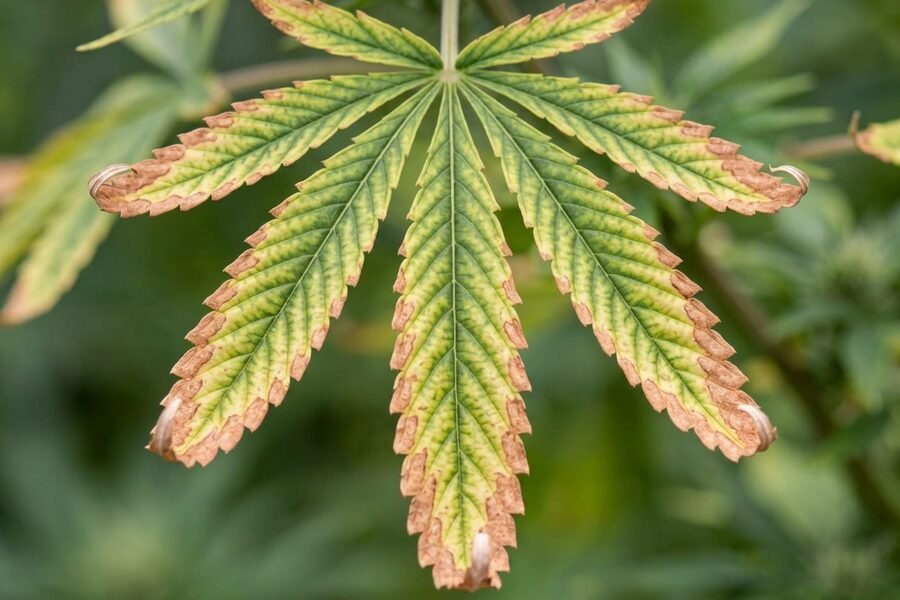
Nutrient burn from overfeeding causes nitrogen toxicity. Leaves turn dark green and shiny, with tips that claw downward.
Nutrient deficiencies — particularly calcium and potassium — interfere with water uptake and structural integrity, causing upward curling alongside discoloration on leaf edges.
How It Happens
Overfeeding creates salt buildup and osmotic stress that the cannabis plant can't regulate, leading to nutrient burn. Conversely, nutrient deficiencies are usually caused by pH sitting outside the optimal range, which blocks roots from absorbing essential nutrients even when they're present.
How to Fix It
Nutrient burn: Flush the medium with plain pH-balanced water at roughly three times the container volume to leach excess salts, then resume feeding at 50% strength.
Nitrogen toxicity: Stop all nitrogen feeding immediately and flush. Switch to a bloom-focused formula with lower nitrogen levels for the next few feeds.
Nutrient lockout: Correct pH first, then reintroduce nutrients at normal strength once pH is stable.
True deficiencies: Once pH is confirmed in range, identify the specific deficiency and supplement accordingly — calcium and magnesium are the most common culprits.
Prevention: Develop a balanced feeding regimen suited to each growth stage and keep an eye on pH levels. Soil grows need a pH of 6.0–7.0; coco and hydro setups prefer 5.5–6.5.
Pests
Pest damage often shows up as curling leaves before any obvious physical damage appears on the cannabis plant. This makes it easy to misdiagnose as a nutrient or environmental issue.
Spider mites leave tiny specks on leaf surfaces with fine webbing on undersides.
Broad mites and hemp russet mites are microscopic, producing wet-looking, twisted new growth.
Fungus gnat larvae work unseen below the soil, damaging roots and causing secondary curl above ground.
Outdoors, aphids, caterpillars, and whiteflies add to the list — sticky residue on leaves or visible insects on stems are signs to act on immediately.
How It Happens
Pests thrive in cluttered, poorly maintained growing environments. A single overlooked infestation can spread across an entire canopy quickly, and by the time leaf curling appears, the population is usually already well established.
How to Fix Leaves Curling From Pests
Inspect thoroughly and often: Check between leaf fingers and the undersides every few days. Use a jeweler's loupe for tiny pests like spider mites that are invisible to the naked eye.
Treat early: Neem oil handles most early-stage infestations and works as a great preventative when applied regularly to at-risk plants.
Use sticky traps: Place them near the base of plants to catch and monitor fungus gnats before larval root damage becomes a problem.
Outdoors: Introduce beneficial insects like ladybugs or predatory mites to keep pest pressure low without chemical intervention.
'Leaf' Curling Cannabis Leaves Behind
Curling cannabis leaves is almost always fixable. The key is reading the signs correctly before reaching for a solution. Heat, light, humidity, water, nutrients, and pests all leave their own fingerprints. Observe the whole plant, check the environment, and make one adjustment at a time.
Whether you're growing cannabis under lights or in full sun, healthy growth at the top of your plants is the clearest sign things are back on track.
And it all starts with the right genetics. Browse our range of cannabis seeds and give your next grow the best possible foundation from day one.
FAQs About Marijuana Leaf Curling
Here are the questions growers ask most when cannabis leaves start curling.
-
Cannabis leaves start curling as a stress response typically triggered by temperature stress, excessive light, low humidity, windburn, nutrient deficiencies, overfeeding, or watering and root problems.
-
Yes. While overwatering more often causes downward drooping, it can cause upward curling too — particularly when combined with heat. Waterlogged roots lose their ability to supply water and essential nutrients efficiently.
-
Leaves that have already curled typically stay that way. New cannabis plant growth coming in flat and green is the real sign of recovery. Once the cause is corrected, healthy growth usually returns within a few days.