Pruning Cannabis Plants: How, When, and Why It Boosts Yields
Pruning cannabis is one of those techniques that looks destructive on the surface but pays off significantly come harvest time. Cut the wrong branch at the wrong moment, though, and you'll set your plant back by weeks. This guide covers exactly when to prune, what to remove, and how to do it cleanly so your cannabis plants put every bit of energy where it counts.
What Is Cannabis Pruning?
Pruning is the targeted removal of specific leaves, branches, and growth sites from cannabis plants. It's not random trimming, it's a deliberate technique used to redirect the plant's energy away from unproductive areas and toward the bud sites most likely to thrive.
Cannabis plants distribute resources across every living part. Fan leaves, lower branches, and shaded bud sites all compete for the same nutrients and growth hormones. By removing the weakest competitors, you free up those resources for the sites that will actually produce dense, well-developed flowers.
Pruning also directly improves two environmental factors that heavily influence bud quality: light penetration and air circulation. Whether you are growing cannabis outdoors or in a tent, a dense, unpruned canopy blocks light from reaching lower bud sites and traps humidity close to the stems. Thinning the plant out resolves both issues at once.
Benefits of Pruning Cannabis Plants
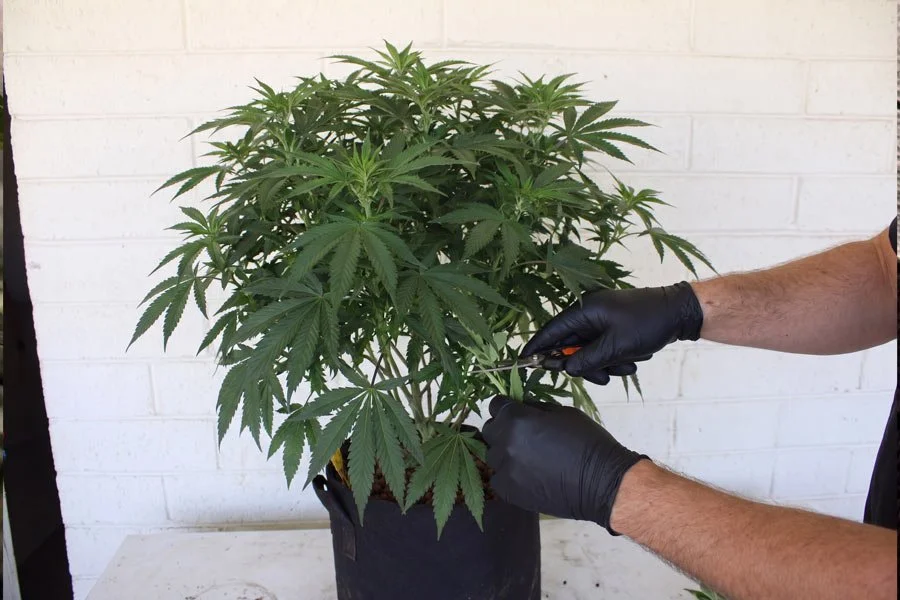
Done at the right time and in the right way, pruning cannabis delivers several practical advantages:
Higher overall yield: Removing unproductive branches and excess foliage allows the plant to channel nutrients and growth hormones into the most productive bud sites, which can translate into larger buds and a stronger final harvest.
Better light exposure: Large fan leaves and dense lateral branching cast shade over lower parts of the plant. Pruning opens up the canopy so adequate light reaches more bud sites throughout the growth cycle.
Improved air circulation: Thick foliage traps moisture and heat close to the stems. Clearing out excess growth promotes airflow, which reduces the risk of mold, mildew, and pest pressure.
Easier plant management: Pruned plants tend to develop a more even canopy, which simplifies feeding, watering, and monitoring for issues like nutrient deficiencies or early signs of disease.
Healthier growth patterns: Yellowing leaves and weak, shaded branches drain resources from healthy plant growth. Removing them keeps the plant's energy focused on productive development.
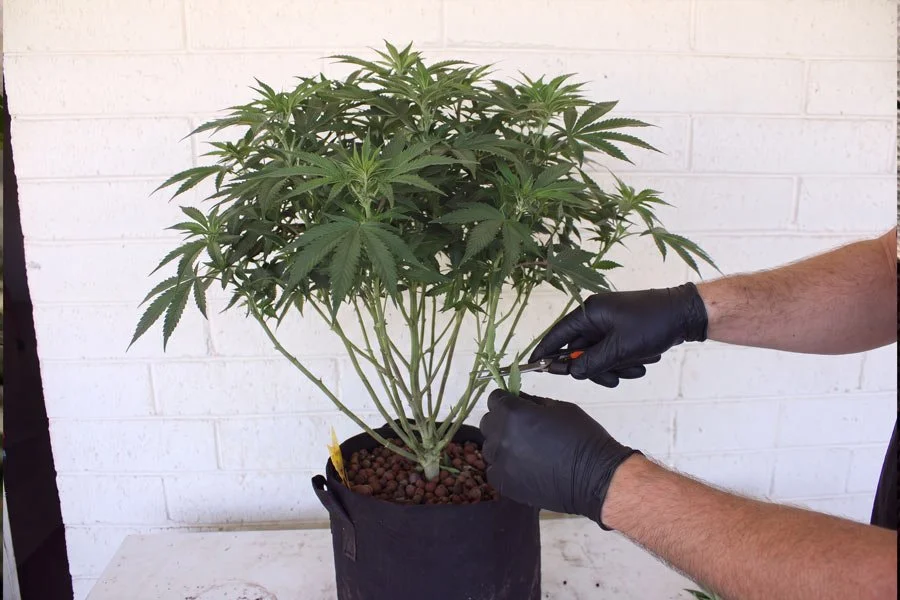
When to Prune Cannabis Plants
Timing is where most growers go wrong. Pruning at the wrong growth stage can stress the plant severely and cut into your maximum yield rather than improve it. Especially if you started off with autoflower genetics, be mindful that autoflowers have less time to react.
Vegetative Growth Phase: The Primary Pruning Window
The vegetative growth phase is when the bulk of your pruning should happen. Cannabis plants are growing rapidly during this stage, recovering quickly from cuts and redistributing energy efficiently. As a general rule, wait until the plant has developed at least five to six nodes before you start pruning, cutting too early interferes with the plant's developmental momentum.
For most growers, this means beginning around week three to four of vegetative growth, once the plant has established a clear structure. You can see which branches are thriving and which are lagging behind. Continue light, regular pruning throughout this phase rather than removing large amounts at once.
When Flowering Begins: Proceed With Caution
Cannabis plants go through a rapid stretch in the first two to three weeks after the flowering stage starts. The plant is under significant physiological stress during this window, and additional pruning risks compounding that stress. Hold off on any significant cuts until the stretch has finished, typically around weeks three to four of flowering.
After the stretch, a second targeted prune is often worthwhile. Remove branches and fan leaves below the canopy line that are no longer receiving sufficient light. These will never develop into meaningful buds and only drain the plant's energy during the flowering phase when bud development is the priority.
Late Flowering: Stop Pruning
Once your cannabis plants are deep into the flowering stage and buds are actively forming, pruning should stop entirely. Any stress you inflict at this point will slow bud production rather than help it. The plant needs every resource directed into flower development, not recovery.
How to Prune Cannabis Plants: Step-by-Step
Step 1: Gather and Sterilize Your Tools
You'll need a pair of sharp pruning shears or sharp scissors. Dull blades cause ragged cuts that take longer to heal and leave the plant open to bacteria and pathogens. Wipe your blades down with rubbing alcohol before you start, and sterilize again between plants if you're working through multiple in the same session.
Step 2: Assess the Plant Before You Cut Anything
Take a few minutes to look at the full structure of the plant before making any cuts. Identify the main stem, the strongest lateral branches, and the areas of dense, overlapping foliage. Note any yellowing leaves, visibly weak smaller branches, or growth shooting inward. You're building a mental map of what stays and what goes.
Step 3: Remove Yellowing and Dead Leaves First
Start with the obvious: yellowing leaves, dead growth, or visibly damaged material. These have no productive function and actively consume resources the plant could direct elsewhere. Remove them cleanly at the base, as close to the main stem or branch as possible.
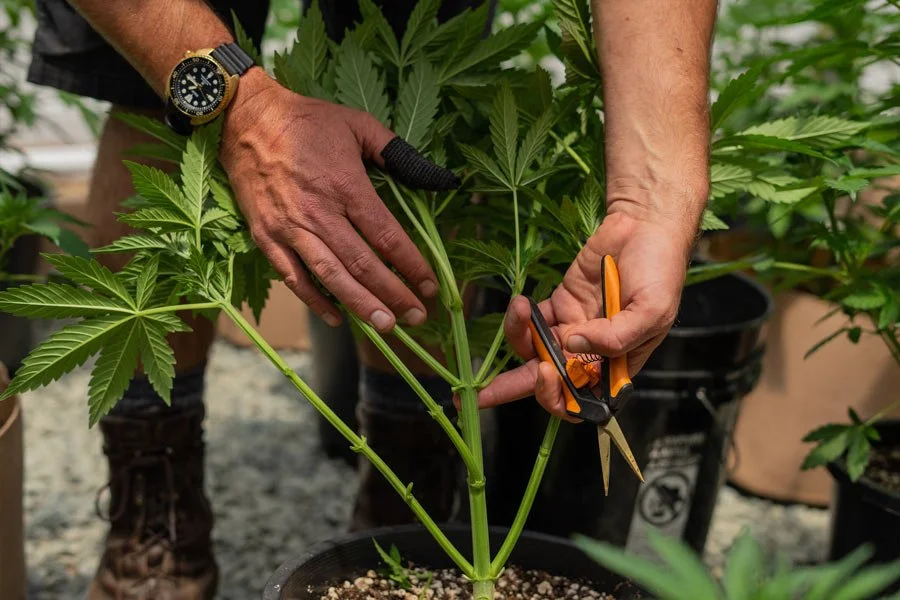
Step 4: Clear the Lower Branches
Lower branches receive very little light because the upper canopy shades them out during the vegetative stage and into the flowering phase. They'll never develop into meaningful bud sites regardless of how well you feed and water the plant.
Removing these unproductive lower branches is one of the highest-return pruning moves available. It clears space for airflow at the base and redirects energy upward toward the productive canopy.
Step 5: Prune Inward-Facing and Crossing Branches
Branches shooting inward toward the main stem, or crossing and rubbing against other branches, create congestion in the middle of the plant. They block light penetration, restrict airflow, and are prone to bruising. Remove them at the base, cutting cleanly and close to the stem.
Step 6: Address Fan Leaves Blocking Bud Sites
Large fan leaves are the plant's main photosynthetic engine, so don't remove them indiscriminately. When a fan leaf is directly shading an active bud site and tucking it isn't an option, removing it makes sense. Focus on leaves that are genuinely blocking light rather than stripping fan leaves as a blanket approach.
Step 7: Allow Recovery Time Before Pruning Again
Pruning inflicts stress on the plant, even when done correctly. Give your cannabis plants a few days—ideally up to a week—to recover between sessions. New growth appearing within that window is a reliable sign the plant has processed the stress and is moving forward.
Avoid removing more than around 20–30% of foliage in a single session, as excessive pruning can seriously stall plant development.
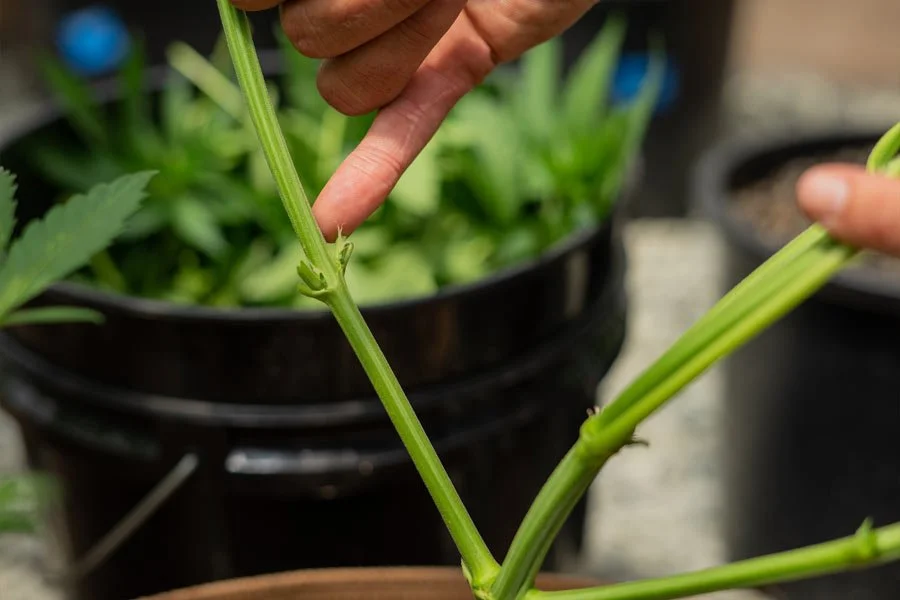
Pruning Tips: Common Mistakes to Avoid
Even experienced growers make pruning errors. These are the most common ones to watch for:
Pruning too early: Starting before the plant has enough nodes and structural development slows growth at a critical stage. Wait until the plant is well established.
Pruning too late into the flowering phase: Heavy cuts once bud development is underway stress the plant when production should be the only priority.
Using dirty or dull tools: Unclean blades introduce pathogens directly into fresh cuts. Dull blades create damage that takes significantly longer to heal.
Removing too much at once: Stripping a large portion of foliage in a single session sends the plant into recovery mode. Work incrementally.
Cutting healthy top growth: Productive upper branches and strong bud sites should never be the target. Focus on weak, shaded, or unproductive areas.
New growers in particular tend to either over-prune out of enthusiasm or under-prune out of caution. Both extremes hurt the final yield. Start conservatively, observe how the plant reacts, and adjust your approach from there.
Pruning Cannabis: Indoor vs. Outdoor Plants
The principles of pruning cannabis are consistent for both indoor and outdoor growers, but the practical approach differs in a few important ways.
Indoor plants benefit most from regular, structured pruning because light distribution is fixed. Any bud site outside your grow light's effective range won't develop properly, making canopy management and lower branch removal especially important for growing cannabis indoors.
Outdoor plants have the advantage of natural, shifting sunlight that reaches the plant from different angles throughout the day, giving weed plants grown outside more useful light at lower bud sites than they'd typically receive indoors.
That said, outdoor cannabis plants tend to grow much larger and denser, making periodic pruning for airflow and pest control an essential part of the process. Regular defoliation passes during the vegetative growth phase help manage size and reduce pressure from spider mites, aphids, and other common outdoor threats.
FAQs
Got questions about pruning cannabis plants? Here are the answers growers ask most.
-
Start pruning cannabis plants during the vegetative stage, once the plant has developed at least five to six nodes. Most growers begin around week three to four of vegetative growth. Pruning before the plant is well established can slow development at a critical stage.
-
Pruning can increase yield when done correctly and at the right time. By removing unproductive branches and excess foliage, the plant redirects energy and growth hormones toward the most productive bud sites, which can result in denser, higher-quality flowers at harvest.
-
Light pruning is acceptable in the early weeks of the flowering stage, particularly after the stretch phase has ended. Heavy pruning once flowering is well underway is not recommended, as it stresses the plant during a critical period and can reduce the overall yield.
-
The basic tools are a pair of sharp pruning shears or sharp scissors, plus rubbing alcohol for sterilization. Sharp, clean blades are the single most important factor, since dull or dirty tools cause ragged cuts and raise the risk of introducing pathogens to the plant.
-
Avoid removing more than around 20–30% of the plant's total foliage in a single session. Taking too much at once triggers a stress response and can pause healthy growth for several days. Prune in small, regular passes and allow the plant a few days to recover between sessions before assessing what to remove next.
Conclusion: Start Pruning Cannabis for Bigger Yields
Pruning cannabis comes down to one principle: remove what isn't contributing so the rest of the plant can do its job better. Work during the vegetative growth phase, keep your tools clean, pace your sessions, and pay attention to how the plant reacts after each prune.
The genetics you start with shape how the plant responds too. Seed Supreme carries a wide range of cannabis seeds suited to every growing style and setup, so you can match the right strain to your pruning approach from the very first grow.