Low Stress Training Autoflowers: A Step-by-Step Guide to Better Yields
Autoflowers are fast, forgiving, and genuinely fun to grow. But getting serious weight out of them takes more than just good genetics. Enter low-stress training, a technique that turns average harvests into impressive ones.
The best part? Low-stress training autoflowers costs you nothing but a few minutes and some soft ties.
The catch is the compressed timeline. Autoflowers handle everyday ups and downs reasonably well, but on such a short clock they have far less time to bounce back from a major early mistake. One mistimed move and you risk stunting the very plants you're trying to boost.
This guide covers what low-stress training actually does, why it suits autoflowering cannabis plants, when to start, and which techniques to use for bigger, better harvests.
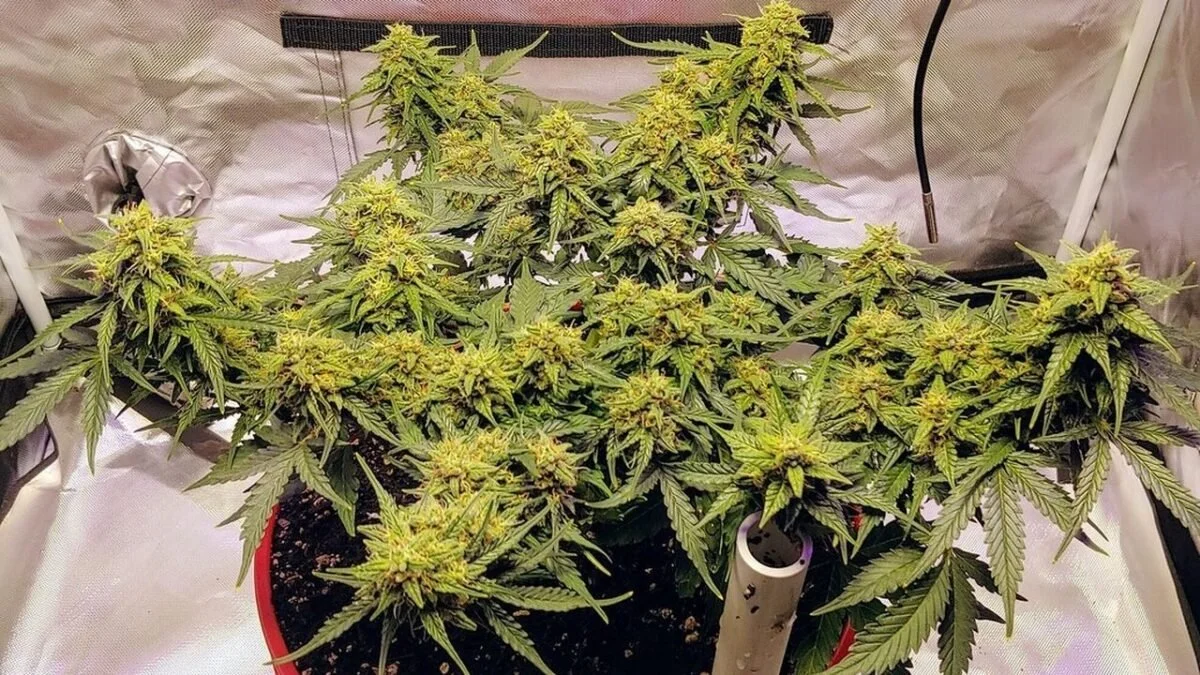
Autoflower after low-stress training
What Exactly is Low-Stress Training?
Low stress training (LST) is a plant-shaping method that uses gentle bending and tying to redirect growth and increase yields. Rather than cutting or removing plant material, you guide how the plant develops over time.
The goal is to break apical dominance. This is the plant's natural tendency to push energy into one tall main cola, leaving lower branches shaded and underdeveloped.
The first time I grew cannabis plants, the autoflowers naturally grew in a Christmas-tree shape. I was pumped to see this big fat bud and thought I was an immediate master grower. But this means the central stem dominates, so side branches and the lower canopy don't get the same light exposure (and that's what they need to develop fat, sticky buds). And if you live in a wetter, more humid climate like I do (Central Virginia, Zone 7B, can get super rainy right around harvest time), this one big bud can get wet and never dry out, leading to the dreaded “bud rot.”
LST disrupts that pattern.
Pulling the top growth down and outward breaks apical dominance and brings side branches up into the light zone. The result is a flatter, more even canopy with better light penetration across every potential bud site and improved air circulation throughout.
Done right, LST promotes growth at every level of the canopy — not just the top.
Why LST Works Especially Well for Autoflowers
Low-stress training suits autos because of one thing: time. Autoflower plants have a short lifecycle, often 7 to 9 weeks from seed to harvest, with slower varieties running up to 13 to 14 weeks. That's part of their appeal. But it also leaves very little margin for recovery from stress.
High-stress training techniques — like topping, fimming, or super cropping — inflict deliberate damage to trigger a growth response. With photoperiod plants, the vegetative stage is a lot longer so the plants have time to recover.
Autoflowering cannabis plants don't work that way.
They follow an internal genetic clock. The flowering stage begins on its own schedule, regardless of light cycle changes or where the plant is in its recovery.
If high-stress training causes even a week of slow growth, that's a meaningful chunk of an autoflower's compact lifecycle gone. In short, high-stress techniques leave too much to chance on plants that are already racing to harvest.
Low-stress training sidesteps that problem entirely.
Because you're bending and guiding rather than cutting, stress stays minimal. Recovery time is short — often just a day or two, so autoflower plants can keep developing at a rapid growth rate, ultimately resulting in bigger yields.
When to Start Low-Stress Training Autoflowers
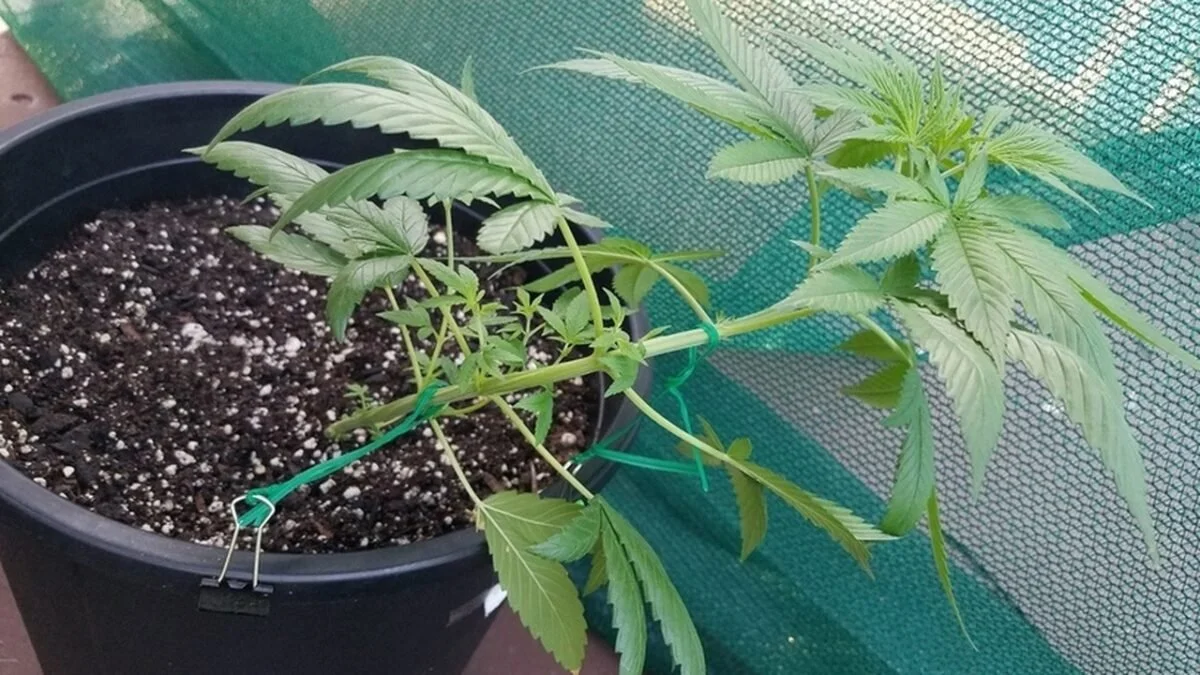
Starting LST on an autoflowering cannabis plant
With low-stress training, timing is everything. Getting it wrong in either direction costs you. Too early and you damage fragile stems. Too late and the structure is already set.
The Ideal Window
The best time to start low-stress training autoflowers is around the third week of the plant's growth. By then, it typically has 3-4 nodes and a main stem thick enough to handle gentle manipulation. Growth is active and there's still enough time to shape the canopy before the flowering phase begins.
Visual Cues to Look For
Don't go by the calendar alone. Watch the auto plant itself and look for:
Leaves widening and darkening in color.
Internodes spacing out slightly between nodes.
New growth appearing quickly at the top.
The canopy visibly filling in and accelerating.
When you see these signs together, that's your signal to start.
When to Stop
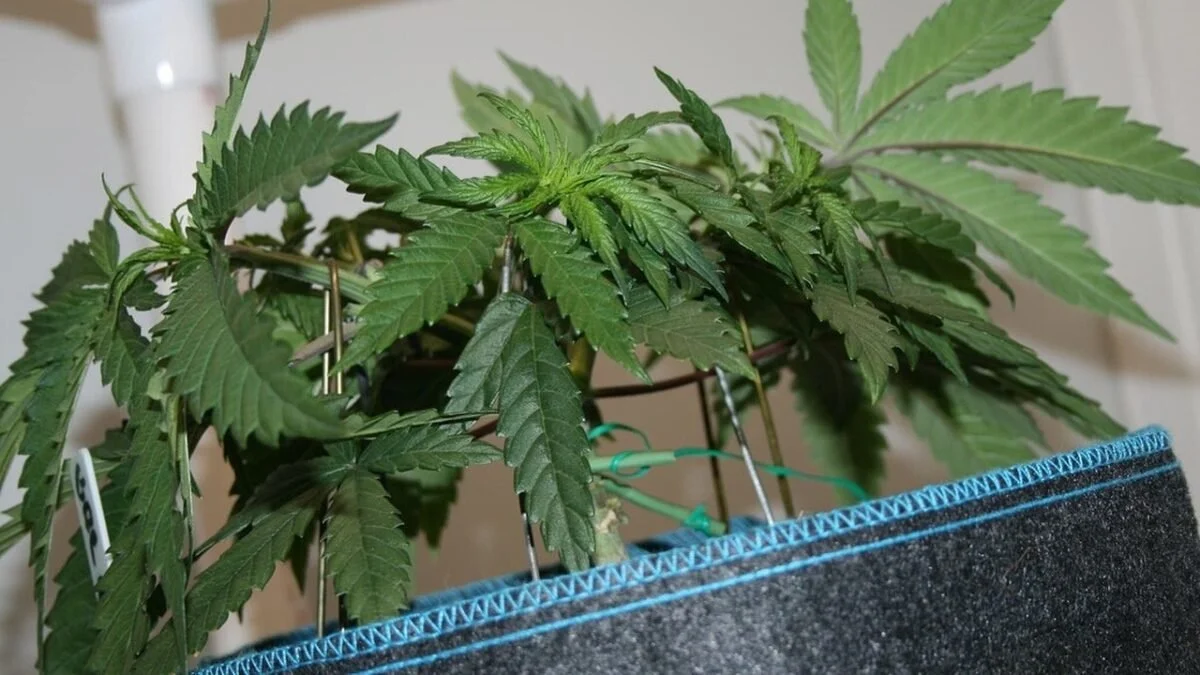
Autoflowering plant tied down to produce more top flowering sites
Autoflowering plant tied down to produce more top flowering sites
LST techniques should only be performed during the vegetative stage. Once your auto plants begin to flower, stop reshaping entirely. At that point:
Adjust ties for the last time and leave them in place.
Prune lower branches that are too shaded to develop.
Let the plant focus all remaining energy on bud production.
Continuing to train past this point introduces undue stress when the plant can least handle it.
Tools You'll Need for LST Training
You don't need much to get started with low-stress training. Part of what makes it appealing is how simple it is. Here are the essentials, available at any garden supply store:
Soft ties: I really love the Budhuggers from Budtrainer. Otherwise, silicone, fabric, or garden velcro all work well. (Avoid metal wire directly against stems.)
Anchor points: holes drilled in pot rims, fabric pot seams, or small stakes in the growing medium.
Scissors: for trimming ties, not plants.
Bamboo stakes (optional): useful for supporting branches at an angle rather than tying them flat.
Clips (optional but recommended): Budclips are easy to use and ensure a smooth LST journey for your autoflower.
If you want the smoothest start to your autoflower LST journey check the Big Bundle from Budtrainer out! Packing everything you need to get you growing like the pros.
Once you've gathered your supplies, it's time to decide which LST techniques you prefer.
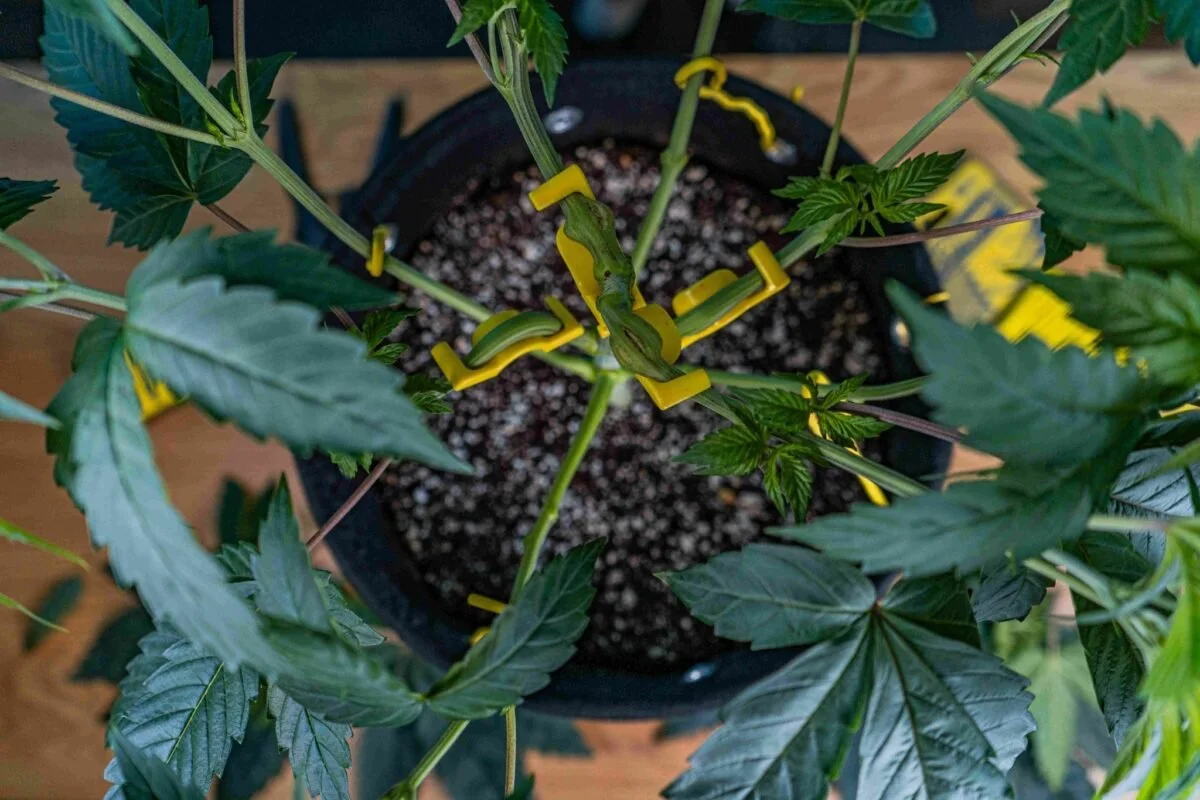
Clips used to train autoflower plant are a good option for autoflower cannabis
Low-Stress Training Techniques for Autoflowering Cannabis Plants
There's more than one way to apply low-stress training, and the right approach depends on your setup, experience level, and how many growing plants you're working with. The LST techniques below run from the simplest option for new growers to more advanced methods suited to larger setups.
The Tie-and-Bend Method
The tie-and-bend is the core approach to low-stress training and the best starting point for most auto growers. Here's how to execute it:
Prepare anchor points. Drill small holes around the pot rim, use fabric pot seams, or push small stakes into the medium or check out Budtrainers BudPots with neat reinforced holes in a fabric pot!
Water your plants. They'll be more pliable and less likely to snap under pressure.
Gently bend the top of the plant away from the center of the pot. Work gradually and don't force anything. If a branch resists, do it in stages over a couple of sessions.
Secure the stem. Fasten the bent stem to your anchor point with soft plant ties. Avoid rigid wire directly against the stem.
Check and readjust daily. Autoflower plants grow fast. A tie that feels loose in the morning can be cutting into a stem by evening. Adjust a little and often rather than making large corrections.
This LST method disrupts the plant's upward growth, pulls the main cola down to canopy level, and encourages side branches to fill the space above.
Leaf Tucking
Leaf tucking is the lowest-risk of all low-stress techniques and a practical first step for newer growers. Rather than tying anything down, you simply tuck large fan leaves that are blocking light away from lower growth. Here's how:
Scan for blocked node sites. Look for fan leaves drooping over developing shoots and cutting off their light.
Pinch the leaf stem halfway down and guide it gently downward. Twist it slightly if needed to stop it springing back into position.
Repeat until every node site has clear exposure to the light. Work around the whole plant, not just one side.
Separate any leaves resting on top of each other. These trap moisture and can quickly become a breeding ground for mold.
Revisit every few days. New growth creates new blockages, so it's an ongoing task throughout the veg stage.
This won't reshape the canopy the way the tie-and-bend approach does. But it meaningfully improves light penetration into the inner canopy and promotes better airflow — all without introducing significant stress.
Sea of Green (SOG)
The Sea of Green method is less about training individual plants and more about how you arrange the grow. Pack many small autoflower plants closely together and their canopies merge into one continuous "sea" of top buds.
Because autoflowers naturally grow a single dominant cola with minimal side branching, they're actually one of the best-suited strains for this style — no high-stress training required.
Before you start:
Use the same strain throughout. Mixing tall sativa autos with compact indica ones creates an uneven canopy, and the taller plants will shade everything below them.
Use the correct pot sizes — 2-3 gallons is the sweet spot. Larger containers encourage too much vegetative growth and autoflower plants will crowd each other out.
How to set up an autoflowering SOG:
Aim for 4-9 auto plants per square meter, spacing them roughly 1 foot apart. This density fills the light footprint without blocking airflow between plants.
Remove only the lowest fan leaves blocking light. Tuck (don't cut) larger fan leaves.
Keep airflow strong above and below the canopy. Tightly packed plants trap humidity fast.
Plan your watering access before you plant. Reaching plants in the middle of a dense SOG is harder than it looks. A drip system or watering wand saves a lot of frustration later.
Support the buds. If the central colas become too heavy and start leaning, use thin stakes to keep them upright.
Screen of Green (ScrOG)
The ScrOG method uses a horizontal screen or net. As autoflower plants grow, branches are woven through it to create a flat, even canopy that encourages lateral growth.
It's a more advanced LST technique that delivers optimal light distribution and the most uniform bud development. But it requires an experienced hand, some additional planning, and a bit of forethought.
Before you start:
Choose larger or sativa-dominant autoflower genetics that have a noticeable stretch phase. Some good options include Devil XXL Auto, Amnesia Haze Auto, and Durban Poison Auto. Compact auto plants may not fill the screen in time.
Install the screen early (around weeks 3-4) before stems become too woody and rigid to work with.
Skip the screen if your auto had a rough start and is small by week 3. Forcing a stunted autoflower plant into a ScrOG will only stress it further.
How to run a ScrOG with autoflowers:
Position the screen 8-12 inches above the canopy so branches have room to grow up into it naturally.
Begin tucking branches as soon as they reach the net. This encourages horizontal growth rather than letting them grow straight up.
Keep defoliation light. Remove a few fan leaves blocking lower node sites, but don't overdo it.
Stop tucking once the plant stops stretching, typically 2-3 weeks into flower. From that point, let buds grow vertically through the screen.
Keep airflow moving above and below the screen. A dense ScrOG canopy traps humidity. Without good air circulation, mold and bud rot become a real risk.
Common LST Mistakes to Avoid
Even experienced growers can run into trouble with low-stress training autoflowers. Most problems come down to timing or overcorrection. These are the ones worth knowing before you start.
Starting too early. Very young autoflower plants have fragile stems. Wait until the plant has 3-4 nodes and a visibly thickening stem before bending anything.
Leaving ties unchecked. Monitor growth daily. A tie that felt loose yesterday can be cutting off circulation by today. Make small corrections often rather than large ones every few days.
Overcrowding the canopy. Pulling all branches into the same zone restricts airflow and creates humidity pockets. Spread shoots out and leave breathing room between bud sites.
Forcing stiff stems. If a branch won't bend, don't push it. Too much stress applied at once causes slow growth. Work in stages and let the plant adjust at its own pace.
Stopping too late. LST is a vegetative-stage technique, so it should stop just before flowering begins. Prune any shaded shoots at the base that will never receive enough light to develop.
Benefits of Low-Stress Training for Autoflowers
When applied at the right time, low-stress training delivers real, measurable improvements to harvest quality. Here's a quick summary of what it does for autoflower plants.
More Bud Sites in the Light
A flat, open canopy means more shoots receive direct light rather than sitting in the shade of the dominant cola. More bud sites in good light means denser, more uniform flowers across the whole plant — not just the top.
Better Airflow & Lower Mold Risk
Spreading branches outward lets air move freely through the canopy. That reduces humidity buildup around developing buds and cuts the risk of mold and bud rot — particularly valuable in tightly packed tents.
Bigger Yields
LST can increase yields by 20-50% or more compared to untrained plants. Every shoot that gets proper light contributes to the harvest rather than staying underdeveloped in the shade.
Easier Trimming
A flatter plant structure makes harvest day noticeably less labor-intensive. Buds are more accessible and more uniform in size.
Height Control Without Cutting
For anyone working in a small tent or limited space, LST keeps autoflower plants low and wide without the hassle of high-stress techniques.
FAQs About Low-Stress Training Autoflowers
Still have a question or two about LST techniques for autoflowers? Here are some answers to the most common queries we get.
-
Start around the third week of growth, once the plant has 3-4 nodes and stems thick enough to bend without snapping.
-
High-stress training techniques like topping and fimming are generally not recommended for autoflowering plants. Autos follow an internal clock rather than a light cycle, so there's very limited recovery time before they flower.
-
Continuing low-stress training into the flowering stage introduces significant stress at exactly the wrong time. It's more likely to reduce yields than increase yields.
-
Check ties daily, especially during rapid growth phases. Small, frequent corrections promote growth in the right direction and are far safer than huge adjustments.
-
Yes. The same timing principles apply outdoors: start around the third week and use plant ties anchored to stakes or pot rims. Outdoor auto plants may need additional support against wind once branches are bent.
Stress Less & Harvest More With Low-Stress Training
Low-stress training autoflowers takes minimal equipment and a little patience.
The payoff in light exposure, airflow, and yield is real — and it compounds with every grow as you get a better feel for how your plants respond.
Go slow, start with the easier LST techniques, and make sure you have the right genetics.
Browse our massive range of autoflower seeds and find the strains that suit your setup, grow space, and goals.